 Blog
BlogWriting
Blog 01
Esoteric Infrastructure
From Internet Alchemy to Deep Learning
The Early Days
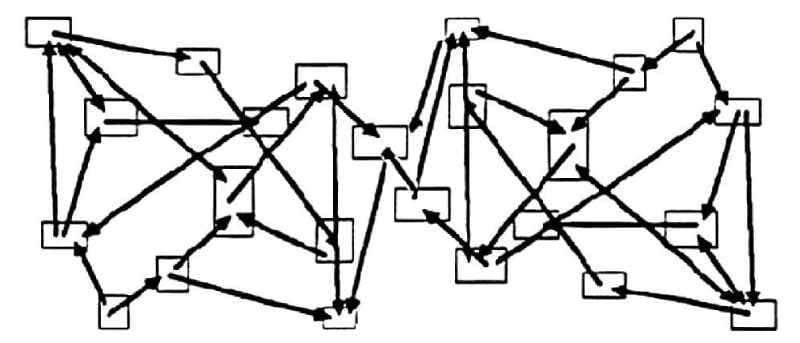
My tech career started during the dot-com boom. The parallels to today's AI moment are hard to miss.
Take network engineering. Movies like Hackers, Sneakers, and The Matrix had shaped a worldview where the internet was a chaotic frontier, and only a chosen few knew how to navigate it. To a teenager like me, network engineers seemed like wizards. Let me explain.
Picture this: you're a Windows NT tech at a data center in the PNW. Business is humming. Then suddenly every helpdesk phone rings at once - remote offices can't upload files, Lotus Notes has frozen, the Sun server at HQ is down. Then the network engineer arrives. You're not sure how they got here so fast.
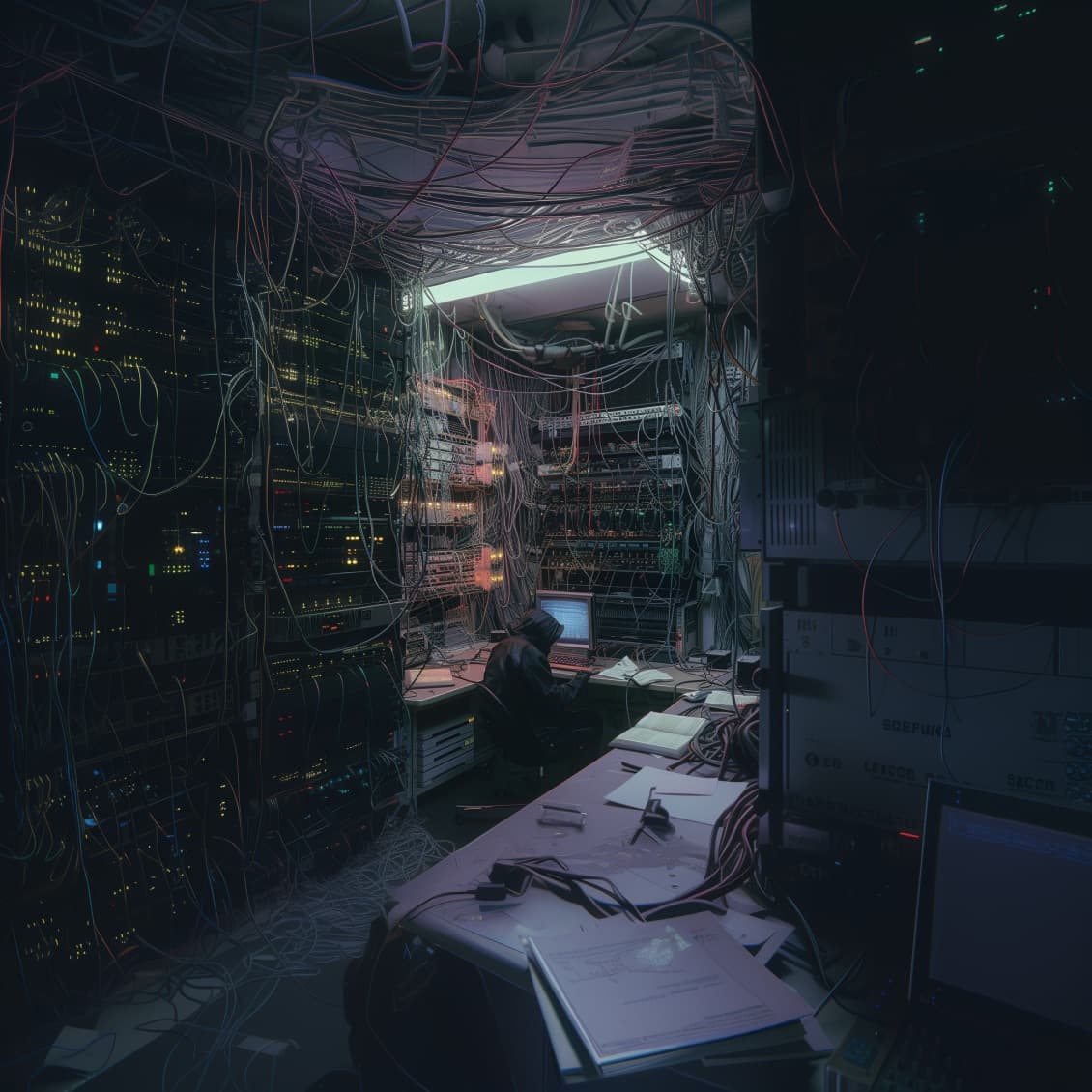
Server rooms always had a locked inner room - no signage, your keycard definitely didn't work on it. The network engineer badges right in. You follow, pretending to rack servers nearby. Inside: strange machines you don't recognize. The engineer has a terminal open, connected to some black box with cables running everywhere. You edge closer. On the screen: an endless scroll of code you can't read.
"What is that?"
You realize you said it out loud. You retreat to your coworkers, who are watching from behind the server racks. Within seconds, everything is back up. The network engineer packs up, says nothing, and leaves. You have no idea what they did. But it worked.
The Allure
The most revered network engineers were CCIEs - they had a 4-digit number after their name, like a badge of rank. The certification was legendarily difficult. They were courted like athletes by the biggest companies.
For a teenage sci-fi enthusiast, this was irresistible. I went from building PCs and administering NT servers straight into the deep end: packet switching, internet backbones, BGP, firewalls, the RFCs. And I learned something surprising: while challenging, none of it was magic. Everything was explainable. Made by regular people.
But I never lost my attraction to the esoteric. Each time I encountered a new "black box" technology, I'd dive in, demystify it, and discover the same thing: it's not that weird. It became a pattern - find the thing that seems like magic, learn how it actually works.
The Parallel
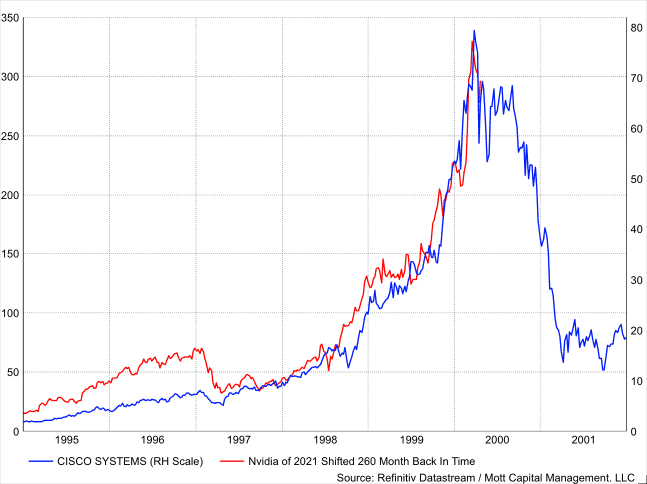
The parallels between dot-com and AI are hard to ignore. Nvidia's stock chart mirrors Cisco's. Deep learning researchers are rare, highly sought after, treated like the CCIE engineers of that era. It's happening again. And this time the promise might be even bigger.
But here's what's different: the transformer might actually be a genuine black box. Matrix multiplications across tens of thousands of dimensions. Scale them up and they work better, but no one fully knows why. Even the creators. It's the first technology I've encountered where "dive in and demystify it" doesn't obviously apply. Maybe this time it really is that weird.
Or Maybe Not
But my pattern of deciphering black boxes makes me optimistic. We've been here before - technologies that seemed like magic until someone figured them out. We've literally turned lead into gold (with a particle accelerator, but still). Now we've taught sand to think. The answers will come. I want to be there when they do.